Mediterranean · Italy
Florence
The cradle of the Renaissance, best taken slowly and from the inside.
- Suggested stay
- from 3 · 4 ideal · up to 6 nights
- Currency
- Euro (EUR)
- Language
- Italian, English
- Best season
- Late April through early June and again from mid-September into October, when the light is clear, the gardens are open, and the worst of the summer crowds and August heat have receded. May offers the longest run of temperate days; September pairs warm evenings with the start of the Tuscan harvest. Winter is quiet and atmospheric — cold, often grey, but the museums are uncrowded and tables are easy.
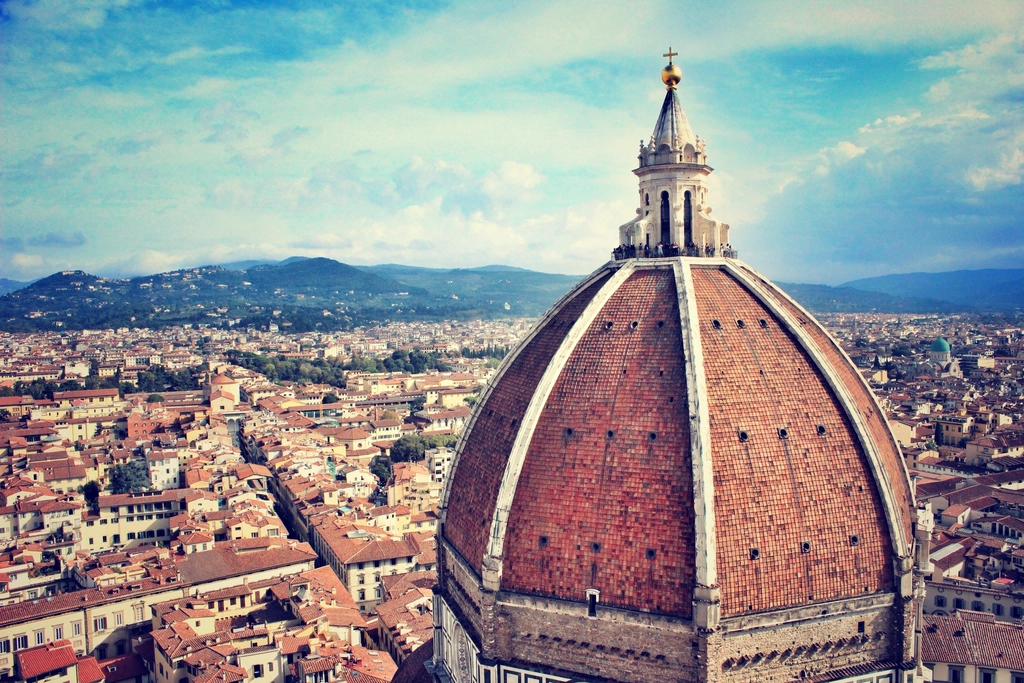
Florence is a small city carrying an outsized inheritance. Within a compact, largely walkable core sit the Uffizi, the Accademia’s David, Brunelleschi’s dome and the Medici’s churches and palaces — the densest concentration of Renaissance art and architecture anywhere. The reward of Florence is not breadth but depth: it is a place to return to a handful of rooms and façades repeatedly, at different hours and in different light, rather than to race a list.
The city rewards the traveller who slows down and, where possible, steps out of step with the crowds. The great galleries are transformed when seen before opening or after closing on a private appointment; the reopened Vasari Corridor restores a piece of Medici choreography that was inaccessible for years; and the Oltrarno, across the river, remains a working district of goldsmiths, leatherworkers and restorers whose ateliers reward a private introduction. The historic centre’s limited-traffic zone means much movement is on foot — an asset, not an inconvenience, since the distances are short and the streetscape is the point.
A stay is best built around a strong central base and a deliberate rhythm: mornings in the museums and churches before the day-trippers arrive, long Tuscan lunches, the late-afternoon passeggiata along the Arno, and evenings given to a table that ranges from a three-star cellar to an unreconstructed trattoria. Florence is also a gateway — Chianti, Montalcino and the hill towns are an easy chauffeured day out, and the surrounding hills offer the resort calm the dense centre cannot.
Three or four nights is the natural span: enough to see the essential works without fatigue, to eat seriously, and to give over a day to the Tuscan countryside. Spring and early autumn are the city at its best — clear light, open gardens, and evenings warm enough to dine outdoors without the summer crush.
Ideal for
Art and architecture devotees · Serious gastronomes and wine collectors · Couples seeking a cultured city break · Repeat Italophiles who want depth over checklist sightseeing
Where to stay
The Houses
Four Seasons Hotel Firenze
Four Seasons · Renaissance palazzo and private garden · Borgo Pinti, a short walk northeast of the Duomo
Set within the 15th-century Palazzo della Gherardesca and a converted convent, the hotel wraps around the largest private garden in central Florence — some four hectares of clipped hedges, ancient trees and a kitchen plot. Frescoed salons and bas-reliefs survive alongside an unhurried, residential calm rare for a city centre.
Why The only address in Florence that trades the bustle of the historic core for genuine garden seclusion without leaving the centre.
Dining: Il Palagio (1 Michelin star, 2026)
Visit hotel →Portrait Firenze
Lungarno Collection (Ferragamo) · Riverside design hotel · Lungarno degli Acciaiuoli, directly beside the Ponte Vecchio
The Ferragamo family's flagship sits on the Arno with an unobstructed line on the Ponte Vecchio, its suites styled as elegant private apartments with a 1950s Florentine sensibility. The address is as central as the city allows, yet the experience is discreet and intensely personal.
Why The finest river view in Florence paired with the warmth of a family-owned house rather than an institution.
Hotel Savoy, a Rocco Forte Hotel
Rocco Forte Hotels · Grand city hotel · Piazza della Repubblica, the geographic heart of the centro storico
Olga Polizzi's contemporary-classical interiors give this landmark a lighter, more art-forward feel than its grand-hotel peers, steps from the Duomo and the Tornabuoni shopping run. Its restaurant Irene, overseen by Fulvio Pierangelini, is among the city's most reliable Tuscan tables.
Why The most central grand hotel in Florence, with a kitchen that out-punches its informal billing.
Collegio alla Querce, Auberge Resorts Collection
Auberge Resorts Collection · Hillside retreat above the city · The hills of Fiesole-facing Florence, above the centro storico
Opened in 2025 in a restored 16th-century former school, this hillside property gives Florence something it has long lacked: a true resort within minutes of the centre, with gardens, two restaurants and a spa. The original chapel and theatre survive as event and dining spaces, and the views down onto the Duomo are exceptional.
Why A resort rhythm — pool, gardens, long lunches — within a short transfer of the Uffizi.
Helvetia & Bristol Firenze, Starhotels Collezione
Starhotels Collezione · Belle Époque grande dame · Via dei Pescioni, off Via de' Tornabuoni
Open since 1885 and richly restored, this intimate house pairs antique-filled salons with Anouska Hempel-designed rooms and a celebrated winter garden. Its Cibrèo Caffè and restaurant bring one of Florence's most beloved culinary names in-house.
Why Old-Florence character at close quarters, with a kitchen rooted in the city's own culinary canon.
The St. Regis Florence
St. Regis (Marriott) · Riverside palazzo · Piazza Ognissanti, on the Arno
Housed in a palazzo whose origins trace to a Brunelleschi design, the St. Regis offers signature butler service and richly layered interiors facing the river. It pairs naturally with its sister property across the square for events and dining.
Why Classic riverside grandeur with the dependable polish of full butler service.
Where to dine
The Tables
Enoteca Pinchiorri
3 Michelin starsItalian haute cuisine · Destination fine dining
Florence's only three-star table, and one of Italy's great cellars — the city's definitive grand occasion.
Santa Elisabetta
2 Michelin starsModern Tuscan · Intimate tasting-menu room
A tiny, ancient-tower dining room delivering the city's most refined contemporary cooking short of Pinchiorri.
Gucci Osteria da Massimo Bottura
1 Michelin starContemporary Italian · Fashion-house osteria
Bottura's playful, design-driven cooking on the city's most storied square.
Borgo San Jacopo
1 Michelin starModern Italian · Hotel fine dining (Hotel Lungarno)
A romantic riverside room with a Ponte Vecchio view and one of the city's deepest wine lists.
Atto di Vito Mollica
1 Michelin starContemporary Tuscan · Chef-led fine dining
Mollica's assured Tuscan cooking inside one of the city's grandest restored palazzi.
Il Palagio
1 Michelin starItalian · Hotel fine dining (Four Seasons)
Starred cooking served, in season, on a terrace over the largest private garden in the centre.
Irene Firenze
Tuscan bistro · Grand-hotel brasserie
Pierangelini's confident, ungimmicky Tuscan cooking and the best people-watching terrace in town.
Trattoria Cammillo
Classic Florentine · Historic family trattoria
The locals' choice for unreconstructed Florentine cooking — bistecca, fritto, truffles in season — with no airs at all.
What to do
Experiences
After-hours private Uffizi tour
By private appointment, outside public hoursCultural access
A licensed art historian leads a small private group through the Botticelli, Leonardo and Caravaggio rooms either before opening or after the gallery closes, when the corridors are empty. The experience can be paired with the recently reopened Vasari Corridor.
Why The Uffizi without crowds is a fundamentally different encounter with the same paintings.
Vasari Corridor walk
Limited-capacity timed entry, private guideCultural access
The Medici's elevated private passage from the Palazzo Vecchio across the Ponte Vecchio to the Pitti Palace reopened in 2024 after years of closure. A guided walk traces the route the Grand Dukes used to move unseen through their own city.
Why A piece of Medici statecraft made physical — and only recently accessible again.
Private Chianti and Brunello cellar day
Private driver-guide, by-appointment estate visitsWine
A chauffeured day into the Chianti Classico hills or south toward Montalcino, with tastings arranged in advance at family estates not open to walk-in visitors, built around a long lunch among the vines.
Why Access to cellars that do not receive the public, at the unhurried pace a serious tasting deserves.
Goldsmith and artisan atelier visits in the Oltrarno
Private introductions to working bottegheCraft
The Oltrarno remains a living district of leatherworkers, gilders, mosaicists and goldsmiths. Private introductions open the doors of working studios — including bespoke commissions — that are otherwise closed to passers-by.
Why Florence's craft tradition encountered at the bench, not the boutique.
Private cooking session with a Tuscan kitchen
Private, by appointmentCulinary
A hands-on session in a market and private kitchen, building a Tuscan menu from the morning's produce — fresh pasta, ragù, seasonal vegetables — guided one-to-one rather than in a group class.
Why The most direct route into the regional cooking that the city's restaurants refine.
Helicopter transfer to a Tuscan estate lunch
Private charterAir
A short rotor hop from Florence out over the vineyards to a countryside estate or hilltop town for lunch, returning by road or air. A vivid way to read the Tuscan landscape and compress a half-day excursion.
Why The countryside that defines Tuscany, seen whole in twenty minutes from the air.
Shopping
The Maisons
Via de' Tornabuoni
Florence's principal luxury artery, running between Santa Trinita and the Antinori palace — the global maisons interspersed with the city's own founding houses. The natural place to begin and the densest concentration of flagship boutiques.
Oltrarno and Santo Spirito
Across the Arno, the artisan quarter where Florence's leatherworkers, jewellers, framers and restorers still keep workshops. Less about flagships than about bespoke craft and one-off pieces made on the premises.
Ponte Vecchio and Borgo SS. Apostoli
The medieval bridge has been the city's goldsmiths' row for centuries and remains lined with jewellers; the streets running off it hold further antique dealers and gold ateliers.
By appointment
Private Ferragamo Museum and archive viewings · Bespoke leather and shoe commissions in Oltrarno botteghe · Goldsmith commissions on and around the Ponte Vecchio
Arrival & departure
Coming & Going
Airports
The closest airport, handling mainly European and domestic flights; a relatively short single runway limits the larger jets, and weather can divert traffic to Pisa or Bologna.
Toscana Aeroporti's second airport, used for wider intercontinental and charter connections and as Florence's bad-weather alternate.
The largest nearby hub for long-haul connections; the Frecciarossa makes the rail link to Florence Santa Maria Novella seamless.
Private terminals
- Corporate Air Service general-aviation terminal and VIP lounge at Florence (FLR)
Meet & greet · gate escort
- Airport meet-and-greet and baggage assistance arranged through the hotels and DMCs
- Private fast-track on arrival via the general-aviation terminal at FLR
First-class & arrivals lounges
- Corporate Air Service FBO lounge at FLR
- Toscana Aeroporti / airline lounges in the commercial terminal
Private transfers
- Chauffeured car transfers from FLR, PSA and BLQ — note ZTL limited-traffic-zone restrictions in the historic centre, where cars cannot enter freely
- Private helicopter charter for estate and countryside excursions
- First-class and private-carriage rail via Frecciarossa to Firenze Santa Maria Novella
Private aviation
- Corporate Air Service is the primary FBO at Florence (FLR); Signature Aviation also lists an FLR presence
- Larger or long-haul private jets typically position into Pisa (PSA) or Bologna (BLQ) given FLR's runway and slot constraints
Immigration fast-track
Fast-track immigration and baggage handling via the general-aviation terminal at FLR, or arranged through the hotel concierge at the commercial terminals.
Curator’s notes — pending verification
- Michelin stars stated as per the 2026 MICHELIN Guide Italy (released Nov 2025): Enoteca Pinchiorri 3*, Santa Elisabetta 2*, and one-star status for Gucci Osteria, Borgo San Jacopo, Atto di Vito Mollica and Il Palagio — verify against the live guide before quoting to a client.
- Borgo San Jacopo showed as 'temporarily closed' on one third-party listing (Yelp) while the Lungarno Collection site and the 2026 guide list it as operating and starred; confirm current opening status directly with the restaurant.
- Hotel-restaurant chef attributions (Fulvio Pierangelini at Irene; executive chefs at Borgo San Jacopo and Il Palagio) can change; verify before promising a specific chef.
- Collegio alla Querce opening date stated as 2025 (Auberge announced reservations from March 2025); the website URL given is a best inference and should be confirmed.
- Trattoria Cammillo has no official website; the Facebook link is the most reliable public reference and should be re-checked.
- FBO landscape at FLR: Corporate Air Service is cited as the principal/sole FBO, but Signature Aviation also lists an FLR location — confirm current operator(s) and lounge arrangements before arrival.
- Airport distances and drive times are approximate and traffic/ZTL-dependent.
- FLR runway/jet-size limitations and weather-diversion patterns are general aviation guidance, not a guarantee for a specific aircraft — confirm with the operator.
- St. Regis Florence website URL is a standard Marriott property-code format and should be verified.
- Via de' Tornabuoni maison list reflects long-standing flagship presence but individual store openings/closures should be re-checked.