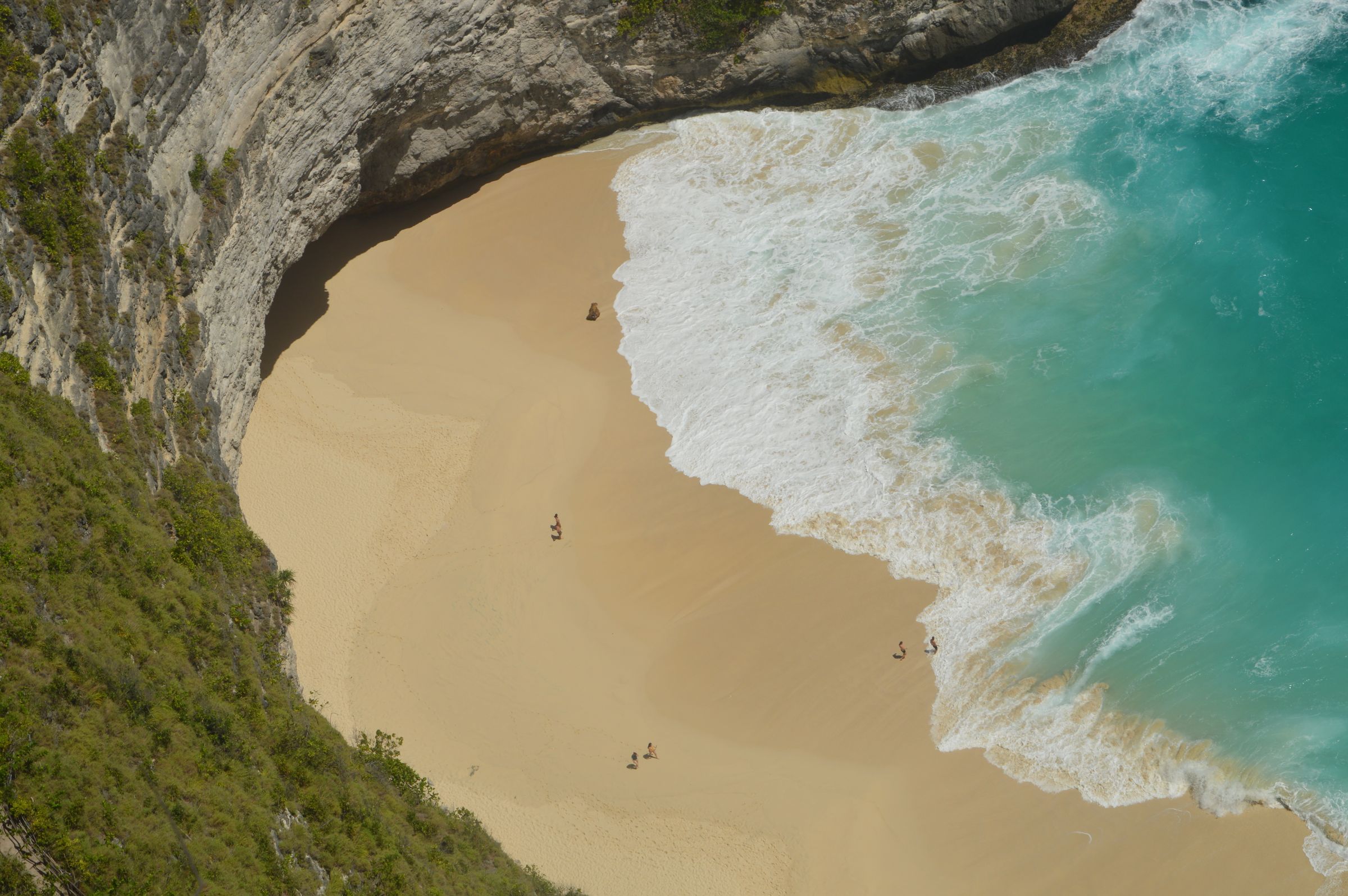
Southeast Asia · Indonesia
Nihi Sumba
A private surf break, a working founder's ethos, and an island Bali forgot to develop.
Plan this trip →- Suggested stay
- from 4 · 6 ideal · up to 10 nights
- Currency
- Indonesian Rupiah (IDR); resort rates and bookings are typically quoted in USD
- Language
- Indonesian, English (widely spoken at the resort), Sumbanese (local)
- Best season
- April through October (dry season) for the most consistent surf at Occy's Left and reliable weather; peak swell for experienced surfers typically runs May through September. The wet season (November to March) brings lusher inland scenery and lower rates but a higher chance of rain and lighter, less consistent surf.
Nihi Sumba exists because two people fell in love with a wave. Claude and Petra Graves, itinerant surfers, found the reef break in front of a stretch of empty coast on Sumba in the late 1980s and built a small, rough camp there, more surf pilgrimage than hotel. What they created was Nihiwatu, and the wave, later named Occy’s Left after the Australian surfing champion Mark Occhilupo, became one of the most closely guarded breaks in the world by the simple mechanism of being nearly impossible to reach. In 2012, with the original resort needing capital and stewardship, fashion entrepreneur Christopher Burch and hotelier James McBride, a Ritz-Carlton veteran, bought it, rebuilt it, and renamed it NIHI. The wave stayed exactly as exclusive as it had always been. Everything else got considerably more comfortable.
That lineage matters because it explains what Nihi actually is: not a resort brand extended into a scenic location, but a specific place that a resort was built around. Sumba itself does the rest of the work. It sits several hundred miles from Bali, across the Sumba Strait, and shares almost nothing with it, no volcano-temple postcard aesthetic, no crowds, a different, older animist religion called Marapu still practiced in stone-tomb villages inland, and an economy so undeveloped that the resort’s affiliated Sumba Foundation funds a meaningful share of the region’s clean water and malaria treatment. Getting there takes effort: a flight to a small airport, then well over an hour by road. That friction is the point. It filters for people who want privacy over spectacle and are willing to trade convenience for it.
The physical resort spreads villas and estates across several hundred acres of grass headland and jungle canopy above its own private bay, each one built from local ironwood, alang-alang thatch, and Sumbanese textiles and carving rather than imported luxury-hotel finishes. Guests surf a wave that, by house rule, never gets crowded because the resort simply will not let it. They ride descendants of the island’s ancient Sandalwood pony stock along empty beaches. They eat fish caught that morning at an open-sided restaurant with the tide audible underneath the conversation. None of it is engineered to look effortless the way a five-star hotel usually is; it is effortless, because the island leaves no other option.
What Nihi sells, in the end, is proximity to something it cannot manufacture elsewhere: a wave nobody else can surf, an island nobody else has developed, and a founding story that still shapes how the place is run two decades on. It has become the most word-of-mouth name in ultra-luxury travel largely because it under-promotes itself relative to what it actually offers, letting the people who already know about it do the talking. That is a deliberate positioning, and Sumba’s remoteness makes it self-reinforcing: this is not a place you stumble into.
Ideal for
Privacy-seeking UHNW travelers who prioritize discretion over polish · Serious and intermediate surfers seeking an exclusive, uncrowded world-class wave · Honeymooners and couples wanting total remoteness · Wellness travelers interested in equine and nature-based programming · Multi-generational families wanting a private, activity-rich island retreat
Where to stay
The Houses
NIHI Sumba
Independent (Burch/McBride ownership; NIHI Hotels) · Private headland and bay above Nihiwatu Beach, Wanokaka, West Sumba
A collection of villas, treehouses, and estates spread across several hundred acres of grass headland and jungle canopy on Sumba's southwest coast, each built with local ironwood, thatch, and Sumbanese art and textiles rather than standard luxury-resort finishes. It grew out of Nihiwatu, the small surf camp Claude and Petra Graves built here in the late 1980s around the wave now known as Occy's Left, and was rebuilt and expanded after Christopher Burch and James McBride acquired it in 2012. The resort fronts its own private bay and the strictly guest-limited surf break, and its economics fund a large share of the Sumba Foundation's clean-water and healthcare work across the island. Villa count has grown over time as new estates and residences have been added; expect real, individually designed accommodations rather than a standardized room product.
Why The single most name-checked address in ultra-luxury travel for guests who want privacy and a genuine sense of place over conventional five-star polish, built around a private world-class wave and a founding story that still shapes how it operates.
Where to dine
The Tables
Ombak Restaurant
Indonesian and international, garden-and-ocean-to-table · Resort fine dining
The resort's main dining room, an open-sided, oceanfront space that is the social center of a Nihi evening, built around produce from the property's own gardens and the day's catch.
Kaboku Restaurant
Japanese, omakase · Specialty Japanese
A small beachfront sushi counter serving multi-course omakase menus built around the day's catch, an unexpected and precise counterpoint to the resort's otherwise rustic-luxe dining.
Nio Beach Club
Indonesian and international, casual · Beachfront pool restaurant
Open-air pavilions beside the main pool for long lunches and, several mornings a week, breakfast with the resort's horses walking the beach in view.
Boathouse Bar
Cocktails and light bites · Bar
The resort's default gathering point, especially at sunset, when it functions as the closest thing Nihi has to a nightly ritual.
What to do
Experiences
Surfing Occy's Left
Guests only; daily surfer numbers capped by the resortsurf
A world-class left-hand reef break directly in front of the resort, named for Mark Occhilupo. Access is capped daily so only a small number of surfers are ever in the water together, and non-guests cannot surf it at all.
Why One of the only genuinely private world-class waves left on earth, and the reason the resort exists in the first place.
Spa Safari at Nihioka
Guests only; advance booking recommendedwellness
A treatment journey at a 100-acre wellness annex reached by open-air safari vehicle, horseback, bicycle, or a coastal trek, set among rice fields, jungle, and ocean, with treehouse-platform dining and open-air bathing pavilions.
Why Turns a spa visit into a half-day expedition through the island's landscape rather than a treatment-room errand.
Equine wellness with the Sandalwood horses
Guests onlywellness
Sessions with the resort's retired and rescued Sumbanese Sandalwood horses, including bareback rides along the beach, horse massage, and equine-guided relaxation work rooted in the island's Marapu belief system, which places horses at the center of the spirit world.
Why A wellness offering with genuine cultural grounding rather than an imported spa-menu gimmick.
Sumba Foundation village visits
Guests only, scheduled through the resortcultural
Guided visits to villages supported by the Sumba Foundation, the nonprofit begun by the resort's original founders and continued under current ownership, which funds clean water, malaria eradication, schools, and clinics across the island.
Why Direct, resort-facilitated exposure to how the property's economics fund most of West Sumba's rural healthcare and water infrastructure.
Waterfall and rice-paddy horseback rides
Guests onlyadventure
Rides through inland Sumba on Sandalwood horses to jungle waterfalls, traditional thatched-roof villages, and terraced rice paddies well outside the resort's beachfront.
Why Shows the interior of an island most visitors never see beyond the coastline.
Arrival & departure
Coming & Going
Airports
The gateway airport for Sumba, roughly 60-90 minutes by road from the resort. Served by daily commercial flights from Bali (Denpasar/DPS) and able to accommodate narrow-body charter aircraft.
Meet & greet · gate escort
- NIHI Sumba resort representative meets guests planeside at Tambolaka and coordinates the road or helicopter transfer to the resort
Private transfers
- Private car transfer from Tambolaka Airport (approx. 60-90 minutes)
- Shared/scheduled car transfer option at lower cost
- Helicopter transfer between Tambolaka and the resort, arranged through the resort or third-party charter operators
Private aviation
- Private charter flights from Bali (Denpasar/DPS) to Tambolaka, arranged directly with NIHI Sumba's reservations team or independent Bali-based charter operators
- No private airstrip on the resort property itself; all air access routes through Tambolaka
Good to know
Questions & Answers
When is the best time to visit Nihi Sumba? +
April through October (dry season) for the most consistent surf at Occy's Left and reliable weather; peak swell for experienced surfers typically runs May through September. The wet season (November to March) brings lusher inland scenery and lower rates but a higher chance of rain and lighter, less consistent surf.
How many nights should you spend in Nihi Sumba? +
6 nights is the sweet spot; 4 at a minimum, and up to 10 if you want to take it slowly.
What are the best luxury hotels in Nihi Sumba? +
The Grand Index ranks 1 houses in Nihi Sumba. The ultra-premier tier: NIHI Sumba. Each is bookable through our advisor at the same rate as direct, with VIP perks layered on.
Which airport do you fly into for Nihi Sumba? +
Tambolaka Airport (Lede Kalumbang Airport) (TMC).
Can I book Nihi Sumba hotels through The Grand Index? +
Yes. Our advisor books every house featured here through Fora, a Virtuoso member agency, at the same rate you would pay direct — with VIP perks such as room upgrades, daily breakfast and a property credit layered on at no extra cost. Begin at the enquiry page.
Where to next
You might also like
Southeast Asia
Bali
Indonesia
A volcanic island where Hindu ritual, jungle and clifftop coast meet a quietly serious luxury hospitality scene.
Southeast Asia
Phuket & Phang Nga
Thailand
Andaman headlands, limestone seas, and the resort that rewrote Asian luxury.
Southeast Asia
Song Saa Private Island
Cambodia
Cambodia's only private-island resort, built inside the marine reserve its founders created